How big a solar system do you actually need?
A sizing guide for homes from Coffs Harbour to the Dorrigo plateau, written by the people who design them
The short answer
Most Mid North Coast homes using 15–25 kWh a day end up with 7.9 kW to 13.3 kW of panels. Divide your daily usage by about 4 for the bare minimum, then size up for winter, a battery or an EV. Homes on the Dorrigo plateau usually need a panel or two more than the same home in Sawtell.
Old sizing advice was written when feed-in tariffs paid 12 to 20 cents. Now midday exports are worth a few cents and evening power costs over 30, so the question isn’t how much you can export. It’s how much of your own power you can use. This is the method Geoff uses on every home system we design, from Coffs Harbour to Nambucca Heads and up the escarpment.
Sizing your system in six steps
Find your daily usage
Your bill shows an average daily usage in kWh, usually beside the usage graph. Use a winter bill if you have one; summer makes most coastal homes look more efficient than they are.
Roughly, a couple uses 10–15 kWh a day, a family of four 18–25, and homes with ducted air or a pool pump often go past 30.
Work out when you use it
Solar only saves you the full retail rate on power you use while the sun is up. A couple out at work all day might use a quarter of their power in daylight. Retirees and people working from home often use half or more.
Midday exports now earn 3.4–6.5c, while evening power costs over 30c. That gap is why timing matters more than the total.
Allow for the sun where you live
Online calculators use Sydney or Brisbane data. The coast from Woolgoolga to South West Rocks does a little better. The Dorrigo plateau, 700 m up and often fogged in on winter mornings, does worse.
| Daily yield per kW | Coast | Plateau |
|---|---|---|
| Summer | ~5.2 kWh | ~4.7 kWh |
| Winter | ~3.4 kWh | ~3.0 kWh |
| Year average | ~4.4 kWh | ~4.0 kWh |
Divide your daily usage by the year average. 20 kWh a day on the coast gives about 4.5 kW. That’s your floor, not your answer; the next three steps set the real size.
Check what your roof will hold
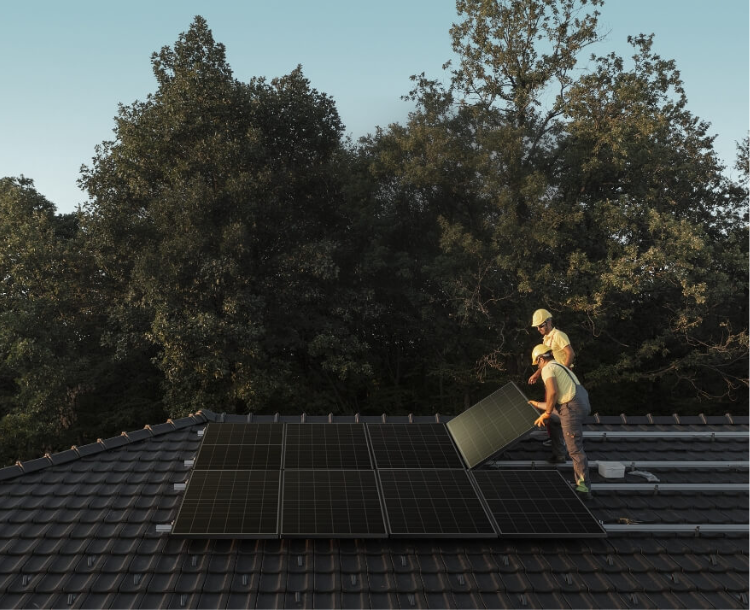
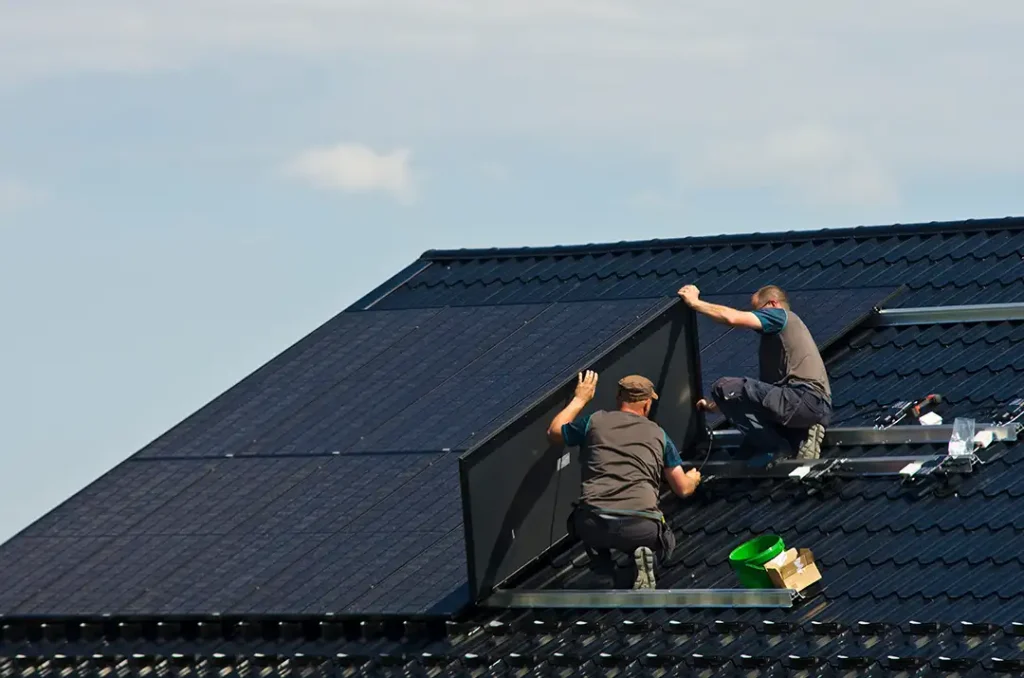
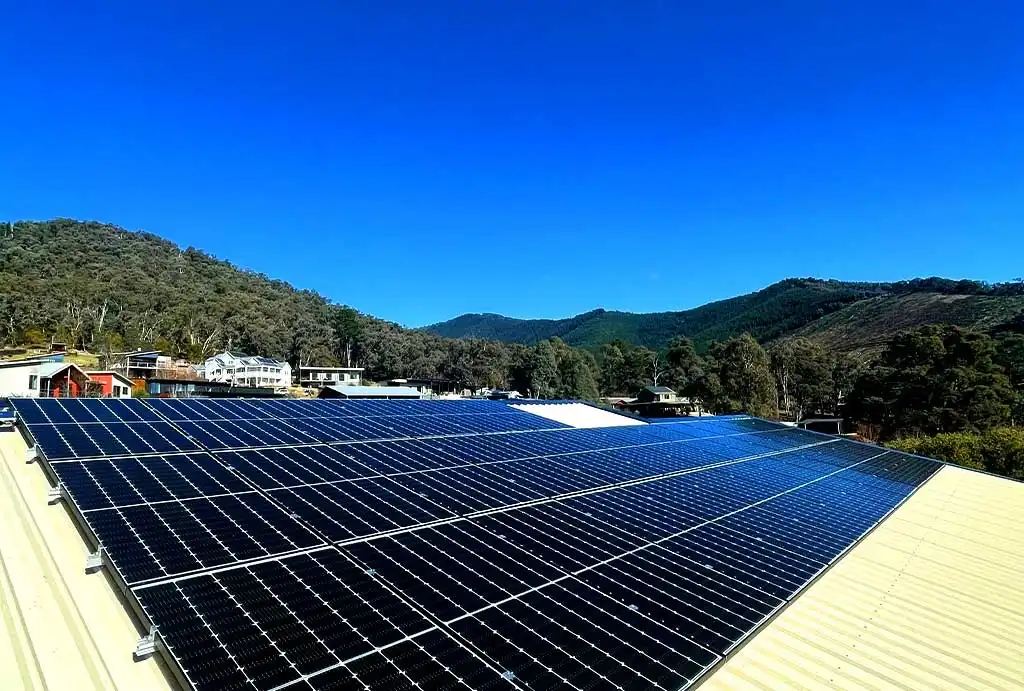
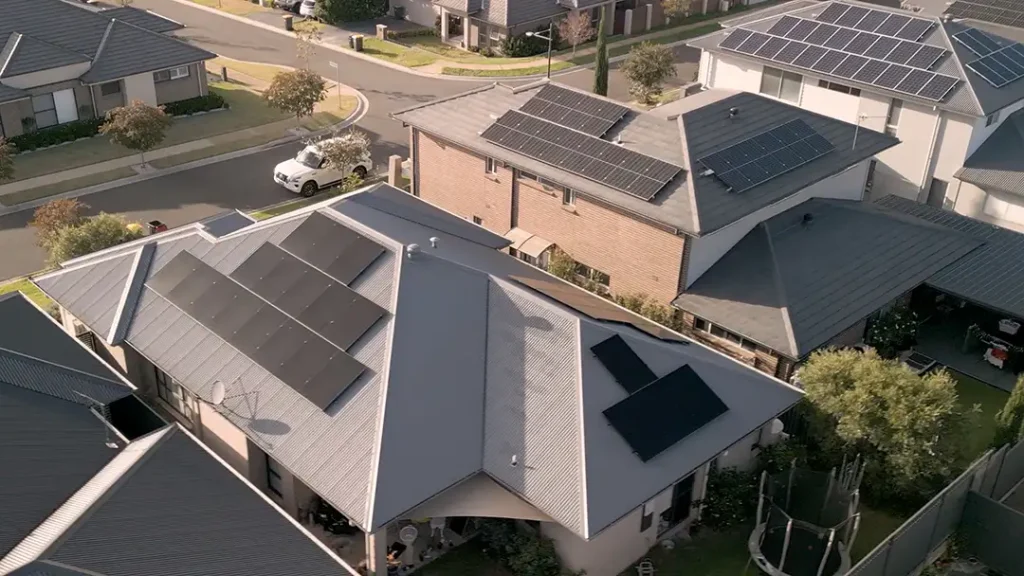
A 440 W LONGi panel takes about 2 m². Eighteen panels (7.92 kW) need roughly 36 m² of clear roof; twenty-four (10.56 kW) about 48 m².
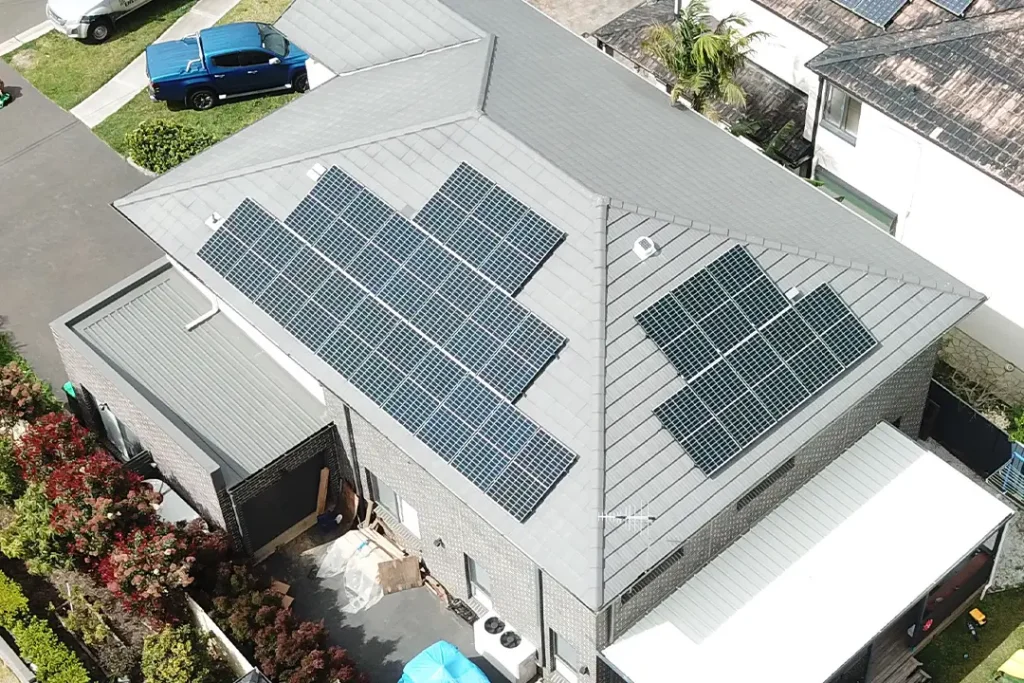
East–west roofs make a little less in total but spread output into the morning and afternoon, when you’re home to use it. The bigger local issue is winter shade from gums and camphor laurels, especially around Bellingen and the Orara Valley.
Check your connection limits
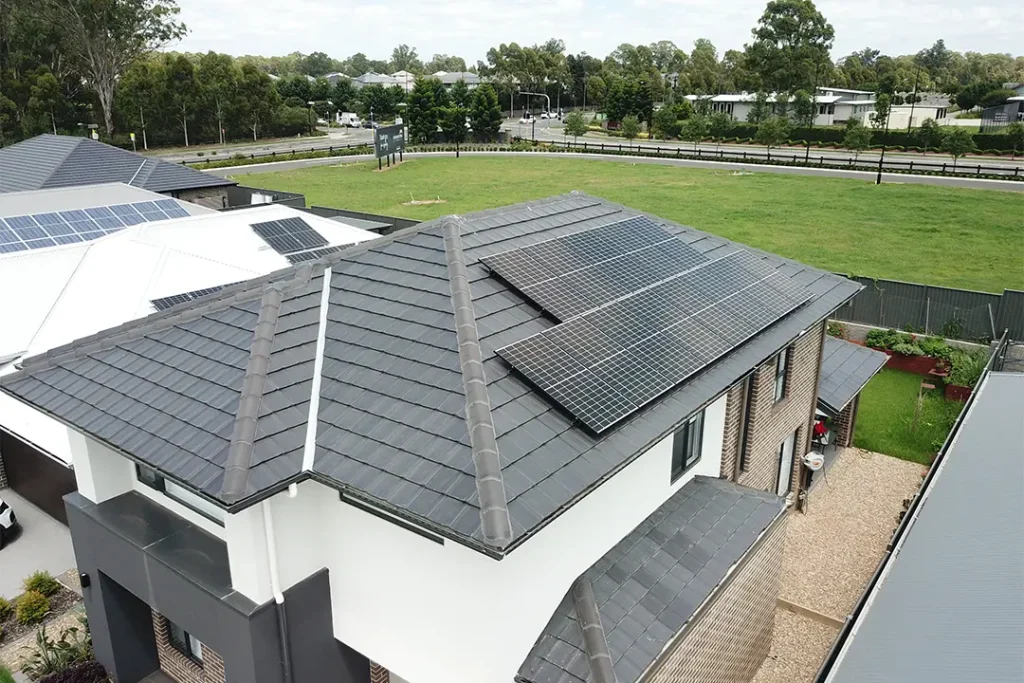
Most homes here are single phase. On the Essential Energy network that typically means an inverter up to 10 kW, with exports capped at 5 kW. Three-phase homes can go bigger.
You can put up to 133% of the inverter’s rating in panels and keep the STC discount. That’s why a 10 kW inverter carries 13.3 kW of panels in our largest single-phase package.
Size for the next ten years
Panels are the cheapest part of the job, and adding more later costs far more than getting it right now. Plan for what’s coming:
- An EV adds about 7 kWh a day. Charge it from the roof.
- A battery needs winter surplus to fill it. Most battery homes want 10 kW of panels or more.
- Electric hot water can soak up spare solar with a Catch Power diverter.
What that looks like for three typical homes
Illustrative examples of households we design for, not specific customers
Retired couple, Sawtell
13 kWh a day, home most of the day
Home in daylight, so they use most of what they make. The bill says 3 kW; 7.92 kW with a hot water diverter covers winter too and leaves room for a battery later.
Family of five, Bellingen
24 kWh a day, air con, out at work and school
The bill says 5.5 kW, but summer afternoons and short winter days both need covering. 10.56 kW does it, with the dishwasher and washer on timers.
Working from home, Dorrigo
22 kWh a day, EV on order
Plateau sun, a car to charge and winter heating after dark. The largest single-phase array plus a battery charges the car at noon and runs the house through the evening.
No grid connection? Sizing works differently
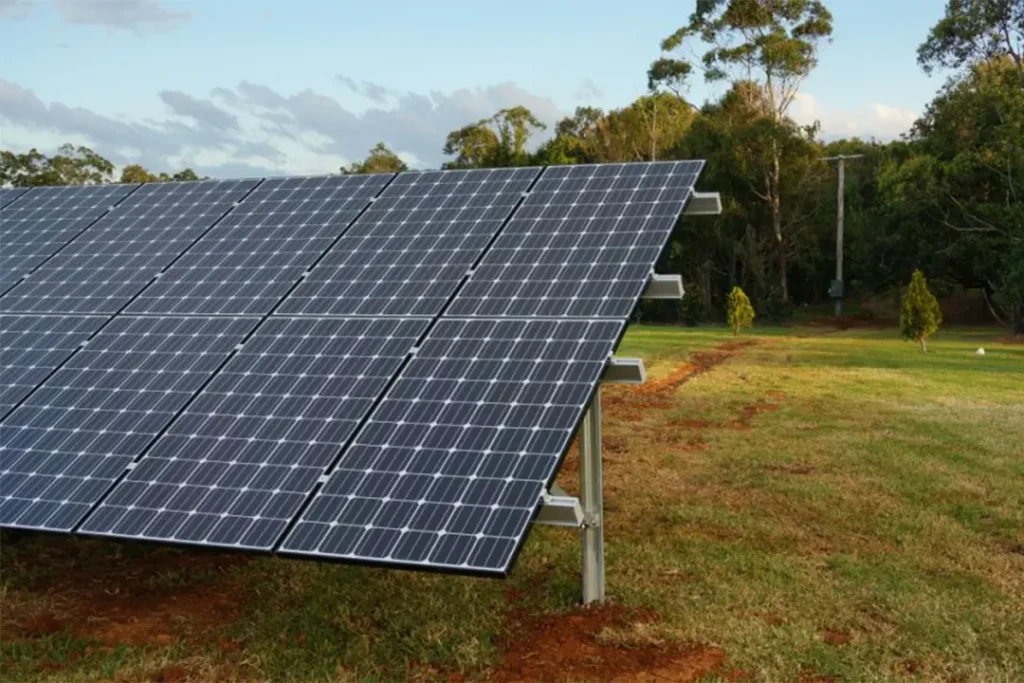
Everything above assumes the grid is your backup. Off-grid homes out toward Ebor, Hernani and Kookabookra can’t lean on it, so we size against the worst winter week, not an average day, with enough battery to ride through several grey days in a row.
Common sizing questions
What size solar system do I need in Coffs Harbour?
Most Coffs Coast homes using 15 to 25 kWh a day end up between 7.9 kW and 13.3 kW. Start by dividing your daily usage by about 4, which is roughly what 1 kW of north-facing panels produces per day averaged across a year on the coast. That gives you the minimum. Then size up for winter output, a future battery or an EV.
Is a 6.6 kW solar system still big enough?
For a small household using under about 12 kWh a day it can be. For most homes it’s now undersized. Panels are cheap, midday exports earn only a few cents, and a system that barely covers your usage in summer falls well short in June and July and leaves nothing spare to charge a battery.
Can I install more panels than my inverter is rated for?
Yes, up to 133% of the inverter’s rating and still qualify for the STC discount. A 10 kW inverter can take up to 13.3 kW of panels. The inverter clips a little at noon in summer, but you gain output in the mornings, afternoons and winter.
Does Dorrigo get less sun than Coffs Harbour?
Yes. The plateau sits around 700 metres above sea level and gets more fog, low cloud and rain than the coast, particularly on autumn and winter mornings. We typically design plateau systems a panel or two larger than an equivalent home on the coast.
How much roof space do I need for solar?
A current 440 W panel takes up about 2 square metres, so an 18-panel 7.92 kW system needs roughly 36 m² of usable, unshaded roof, and a 24-panel 10.56 kW system needs around 48 m², before edge clearances.
Should I size solar differently if I want a battery?
Yes. A battery can only store surplus, so the panels need to cover your daytime use and still have enough left over to fill the battery on a typical winter day. Most battery homes on the Mid North Coast need 10 kW of panels or more.
Let us size it for you
Send a recent bill and a photo of your meter box. We'll tell you what size makes sense before anyone drives anywhere.
0422 544 555 | geoff@bettervolt.com.au | 1 Ash Street, Dorrigo NSW 2453
Yield figures are typical starting points for north-facing arrays and vary with roof pitch, orientation, shading and weather. Prices current as of September 2026.